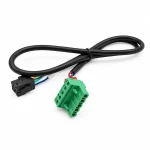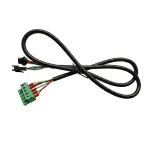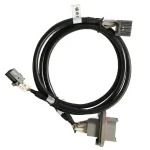
Wire harness DFM is a design-for-manufacturing review that assesses whether a custom wire harness can be consistently built, tested, labeled, packed, and repeated in production. It is used to convert engineering intent into a manufacturable cable assembly without relying on guesswork during sampling or bulk production.
DFM is not a way to make a design cheaper by cutting corners. Good DFM removes unclear details, simplifies avoidable complexity, and makes the approved design easier to reproduce. For OEM buyers, this reduces the risk of beautiful drawings becoming painful production orders.
Key Takeaways
- Wire harness DFM should start before sampling, not after the first failed assembly trial.
- DFM checks whether the supplier can strip, crimp, assemble, protect, test, label, and pack the harness consistently.
- If the BOM is incomplete, DFM should stop assumptions from becoming wrong components.
- If the equipment layout is tight, DFM should connect with routing design and connector positioning before sample approval.
- The strongest DFM output is a clearer drawing, cleaner BOM, fewer sample revisions, and more controlled mass production.
Why Does DFM Matter in Custom Wire Harness Projects?
DFM matters because wire harness problems often come from small build details that are not visible in the electrical concept. A correct circuit can still be hard to produce, hard to install, hard to inspect, or hard to repeat if the design ignores manufacturing and assembly realities.
Many buyers send a drawing and expect the supplier to “understand the rest.” That works only for simple replacement cables. For OEM equipment, the missing details usually appear later as sample revisions, connector confusion, label changes, production delays, or inconsistent batches.
A good DFM review should connect with the wire harness design review at the beginning of the project. Design review checks whether the design information is clear; DFM checks whether the design can be produced repeatedly without drama. Drama belongs in movies, not your purchase order.
What Should Wire Harness DFM Check?
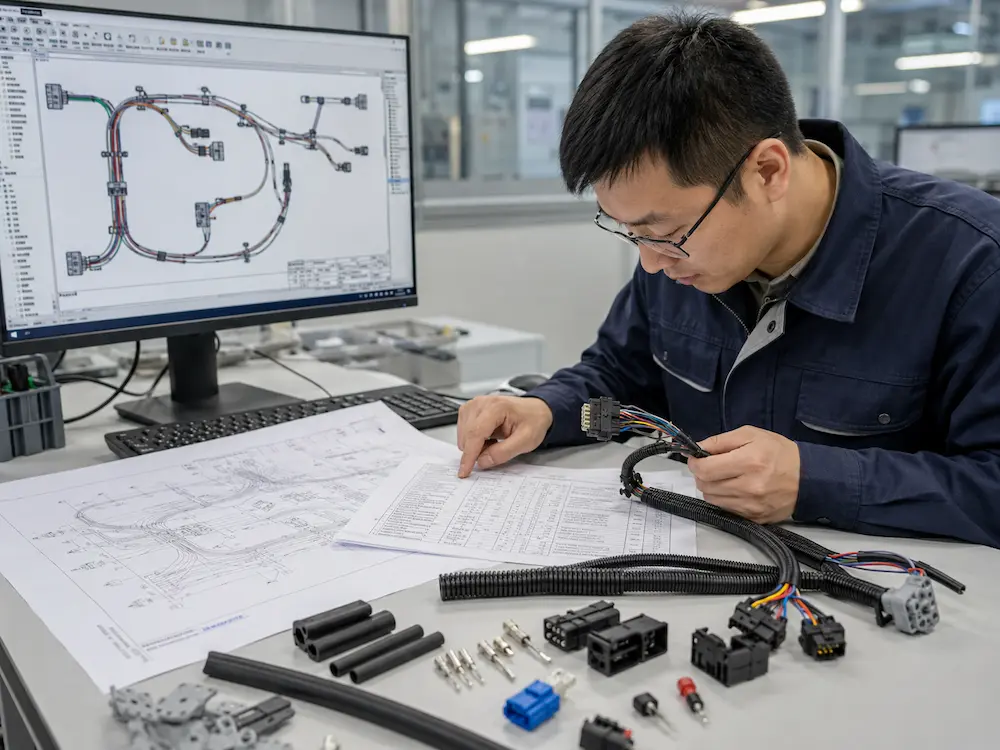
Wire harness DFM should check every detail that affects production stability and assembly use. The review should not stop at electrical function. It should include BOM accuracy, wire preparation, crimping feasibility, connector assembly, branch layout, protection choice, label method, testing process, and packing separation.
| DFM Area | What to Check | Risk If Ignored |
|---|---|---|
| BOM completeness | Connector models, terminals, seals, wires, sleeves, labels, tapes, and accessories. | Quotation gaps, wrong substitutes, and repeated confirmation emails. |
| Wire preparation | Cutting, stripping, tinning if required, wire color, marking, and length tolerance notes. | Inconsistent branches, poor assembly fit, and inspection disputes. |
| Crimping and connector assembly | Terminal compatibility, cavity layout, locking direction, seals, and strain relief. | Loose terminals, wrong pinout, hard assembly, or hidden service problems. |
| Routing and branch layout | Branch exit direction, bend areas, fixing points, and installation path. | The harness may pass testing but fail during equipment installation. |
| Protection method | Sleeving, corrugated tube, tape, heat shrink, grommets, and abrasion control. | Overprotection increases bulk; underprotection raises damage risk. |
| Testing and labels | Continuity check, visual inspection, label content, barcode, and SKU separation. | Correct parts become difficult to verify, sort, and install. |
Use the table as a production-readiness filter. If one row cannot be confirmed, the supplier may still quote, but the quote is built on assumptions instead of controlled data.
If X → Choose Y: DFM Decision Logic
Choose the DFM depth according to how much the harness affects assembly, safety, service, and delivery control. A simple harness may need a basic manufacturability review. A complex OEM harness needs a stronger review that includes BOM control, routing, inspection, and production repeatability.
| If Your Project Has… | Choose This DFM Focus | Reason | Related Guide |
|---|---|---|---|
| Incomplete or changing part numbers | BOM and revision control review | Prevents wrong substitutes and outdated production documents. | Wire harness BOM management |
| Compact machine installation | Routing and branch direction review | Prevents connector access problems and difficult harness fixing. | Wire harness routing design |
| Moving parts or repeated flexing | Bend radius and strain relief review | Reduces risk around unsupported cable exits and repeated movement. | Wire harness bend radius |
| Bulk order after approved sample | First article inspection review | Confirms the approved design can be repeated before mass production. | First article inspection |
This table helps buyers decide where to spend engineering attention. Do not review every detail equally; review the part of the design most likely to delay assembly or create wrong production.
Common DFM Mistakes and Consequences
DFM mistakes usually happen when a buyer and supplier assume the other side has already checked the missing details. The supplier assumes the drawing is complete; the buyer assumes the supplier will fix build problems. That gap is where wrong samples and slow production quietly grow teeth.
- Using the BOM only as a price list
- A BOM should control components, alternatives, labels, and production documents. If the BOM is only used for quotation, it cannot prevent wrong materials.
- Approving a sample without production notes
- A sample can look correct while the production team still lacks clear instructions for branch layout, label position, or packing method.
- Ignoring assembly sequence
- The harness may be technically buildable but difficult to install once covers, brackets, motors, or panels are already mounted.
- Overprotecting the harness
- Too much sleeving, tubing, or tape can make the harness bulky, stiff, and harder to route through compact equipment.
- Underprotecting stress points
- Exposed bends, connector exits, and abrasion points may become the first places to fail during use.
Practical DFM Checklist Before Sampling
A practical DFM checklist should make the supplier confirm what will be built, how it will be built, how it will be inspected, and how it will be packed. The checklist should be used before sampling because sample correction is slower than early clarification.
- Confirm whether the drawing and BOM share the same revision.
- Confirm whether connector part numbers include terminals, seals, locks, and accessories.
- Confirm whether the supplier understands the mating device and connector orientation.
- Confirm whether branch exits match the equipment installation direction.
- Confirm whether protection materials are selected for the actual environment, not copied from an old project.
- Confirm whether label content and label position are visible after installation.
- Confirm whether the test report format matches the buyer’s approval process.
- Confirm whether bulk packing prevents similar harnesses from being mixed.
Recommendation for Custom Wire Harness Buyers
For custom wire harness projects, ask for DFM feedback before asking only for the lowest price. A cheaper quote with missing assumptions can become more expensive after repeated samples, wrong components, production waiting time, and assembly line interruption.
Lex can review drawings, BOMs, routing risks, connector details, protection choices, and inspection requirements before sampling. If your project is moving from prototype to repeat orders, connect DFM with engineering change management so the approved version stays controlled during production.
Related Wire Harness Guides
Use these related guides to connect DFM with design review, routing, BOM control, and first article inspection before approving a custom harness for bulk production.
FAQ About Wire Harness DFM
What does DFM mean in wire harness manufacturing?
DFM means design for manufacturing. In wire harness manufacturing, DFM checks whether the harness design can be built, tested, labeled, packed, and repeated consistently. It reviews drawing clarity, BOM completeness, connector assembly, branch layout, protection method, and inspection requirements before production.
Why is DFM important for custom wire harness projects?
DFM is important because many wire harness problems come from unclear build details rather than the circuit itself. DFM helps prevent wrong connectors, difficult routing, inconsistent labels, incomplete BOMs, sample revisions, and production delays before they become order problems.
When should wire harness DFM be done?
Wire harness DFM should be done before sample production and again before mass production if the sample changes. Early DFM clarifies missing information, while final DFM confirms that the approved sample, drawing, BOM, labels, and inspection plan match.
What is the difference between design review and DFM?
Design review checks whether the wire harness requirements are clear and complete. DFM checks whether the design can be manufactured, inspected, and repeated efficiently. Strong projects use both: design review prevents unclear requirements, and DFM prevents production problems.